
Sussex County Property Tax Information
Sussex County sits in the northwestern corner of New Jersey and contains 24 municipalities spread across rural hills, farmland, and small towns. The Sussex County Board of Taxation oversees property assessments for the entire county and hears appeals from owners who dispute their assessed values. Newton serves as the county seat and houses the main county offices. Property records here cover a mix of residential homes, agricultural parcels, and wooded tracts. Owners can search assessment data, review tax maps, and obtain land records through several county and state resources.
Sussex County Quick Facts
Sussex County Board of Taxation
The Sussex County Board of Taxation manages assessment certification, equalization, and tax appeals for all 24 municipalities. The board ensures that each local assessor values real property at true market value as required by N.J.S.A. 54:4-1. This statute mandates that all real property be assessed at 100 percent of its true value. The board also applies equalization tables each year so that each town pays its fair share of the county tax levy. These tables adjust for differences in how close each town's assessments are to actual sale prices.
Property owners who believe their assessed value is too high may file an appeal with the board. Under N.J.S.A. 54:3-21, any taxpayer can petition for review of their assessment. The standard filing deadline is April 1 of each tax year. In years when a municipality completes a revaluation, the deadline extends to May 1. The board schedules hearings where the owner and the local assessor each present evidence. The board can raise, lower, or confirm the assessed value based on what the facts show.
Appeals that involve assessments above $750,000 must go to the New Jersey Tax Court rather than the county board, per P.L. 2017, c. 128. This threshold applies to the total assessed value of the property.
| Office |
Sussex County Board of Taxation 1 Spring Street Newton, NJ 07860 |
|---|---|
| Appeal Deadline | April 1 (May 1 in revaluation years) |
| Website | sussex.nj.us - Tax Board |
Assessment Records and Tax Lookups
Assessment records for Sussex County properties are available through the Tax Records NJ portal. This tool lets you search by owner name, address, block, or lot number. Each record shows the assessed land value, improvement value, total assessment, and qualification code. The records also list any deductions or exemptions that apply to the parcel, such as the veteran or senior citizen deduction.
Under N.J.S.A. 54:4-23, every municipal assessor must prepare an annual assessment list that values all taxable real property in the district. This list forms the basis of each year's tax bills. Sussex County's 24 assessors submit their lists to the county board for review and certification. The board checks the lists for accuracy and consistency before they go into effect. Property owners receive a Chapter 75 postcard each year showing their new assessed value, which triggers the window for filing an appeal.
The NJ Property Tax Explorer provides a statewide view that includes Sussex County data. You can compare tax levies, equalization ratios, and average assessments across all 24 municipalities. This tool is helpful for owners who want to see how their town's rates stack up against neighboring districts.
Note: Online assessment data may not reflect the most recent changes. For current figures, contact your local assessor.
Land Records at the County Clerk
The Sussex County Clerk's Office maintains land records including deeds, mortgages, liens, and property transfer documents. These records trace the chain of title for every parcel in the county. When a property changes hands, the new deed is recorded with the clerk. This creates a public record that anyone can search.
Deed searches are a key part of property tax research. The assessed value on file with the tax board reflects what the assessor believes the property is worth. The deed shows what a buyer actually paid. Comparing these two figures can reveal whether an assessment is in line with the market. Under N.J.S.A. 54:4-26, assessors must consider recent sales when setting values. A large gap between the sale price and the assessed value may be grounds for an appeal or a reassessment.
The clerk's office also records tax sale certificates. When a property owner fails to pay taxes, the municipality can sell a lien on the property at a public tax sale. The certificate of sale is then recorded with the county clerk. These records are public and can be searched in person or through the clerk's online portal.
GIS Mapping and Parcel Boundaries
Sussex County operates a GIS mapping service that displays property boundaries, parcel information, and aerial imagery for the entire county. The GIS viewer lets you click on any parcel to see its block and lot number, owner name, acreage, and assessment details. You can overlay layers for zoning, flood zones, wetlands, and municipal borders.
Tax maps are a core part of the assessment process. N.J.S.A. 54:4-26 requires that each municipality maintain current tax maps showing all parcels, lot lines, and block boundaries. When land is subdivided or lots are merged, the local assessor updates the tax map and assigns new identifiers. The county board reviews these changes as part of its annual certification of the assessment rolls.
GIS data is especially useful in Sussex County because of the large rural parcels and wooded tracts that make up much of the landscape. Satellite imagery helps assessors verify land use classifications. It also helps owners confirm that their lot boundaries match what is on file with the tax office.
Note: GIS maps are for reference. They do not replace a licensed survey.
Filing a Tax Appeal in Sussex
Property owners in Sussex County can challenge their assessment by filing a Petition of Appeal (Form A-1) with the county board. The form asks for the property location, the current assessed value, and the value the owner believes is correct. Supporting evidence should include recent comparable sales, an independent appraisal, or documentation of property defects that reduce market value.
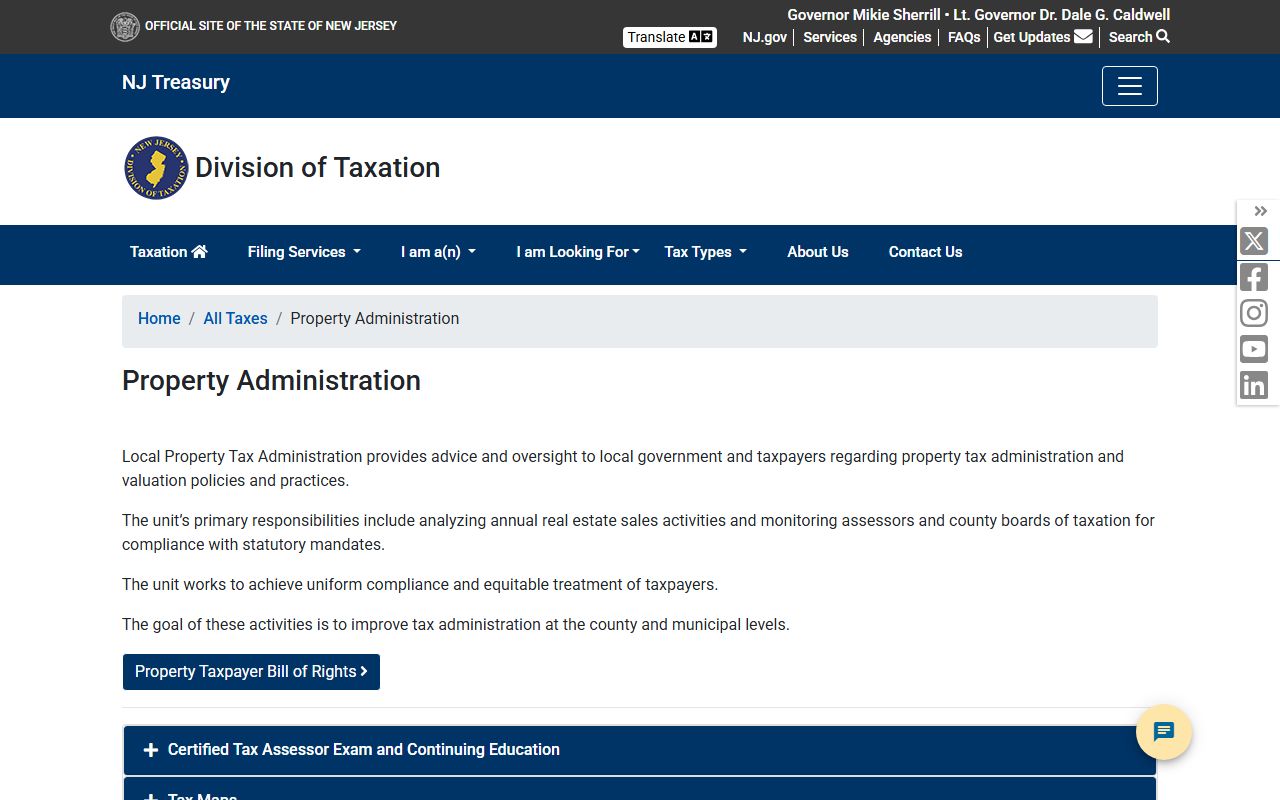
The NJ Division of Taxation appeal guide explains the full process for both county board and Tax Court appeals. At the county level, hearings are informal. The owner and the assessor each present their case, and the board issues a written decision. If either side disagrees with the result, they can appeal to the Tax Court within 45 days under N.J.S.A. 54:3-21.
Strong appeals rest on solid evidence. The most persuasive proof is a set of three to five comparable sales from the same municipality or a nearby area, closed within 12 months of the assessment date. An appraisal from a licensed appraiser also carries weight. The board looks at the facts and decides what the property would sell for on the open market.
The deadline is firm. Late filings are not accepted.
Property Tax Deductions and Relief
New Jersey provides several property tax relief programs available to Sussex County residents. These programs reduce the tax burden for qualifying homeowners based on age, income, disability, or military service. Applications go to the local municipal assessor in each of the 24 towns.
- Senior citizen and disabled person $250 deduction under N.J.S.A. 54:4-3.30
- Veteran $250 deduction under N.J.S.A. 54:4-3.15
- Senior Freeze program that reimburses eligible seniors for tax increases
- Homestead Rebate for qualifying homeowners
- Farmland assessment under the Farmland Assessment Act for qualifying agricultural land
Farmland assessment is particularly relevant in Sussex County. Many parcels qualify for reduced assessments under the Farmland Assessment Act of 1964, N.J.S.A. 54:4-23.1 through 54:4-23.23. To qualify, the land must be at least five acres and devoted to agricultural or horticultural use that produces income. The assessed value drops to reflect the land's use for farming rather than its development potential. This program significantly reduces tax bills for working farms and preserved agricultural land throughout the county.
The NJ Division of Taxation local property tax page lists current income limits and provides application forms for each relief program. Deadlines vary by program, so owners should check the state site or contact their local assessor early in the year.
Public Records Requests
Property tax records in Sussex County are public documents. Anyone can request copies of assessment lists, tax maps, deeds, and other records through the Open Public Records Act, N.J.S.A. 47:1A-5. OPRA requests can be filed with the specific county office that holds the record you need. The county clerk handles deed and mortgage records, the tax board handles assessment data, and individual municipalities handle local tax collector records.
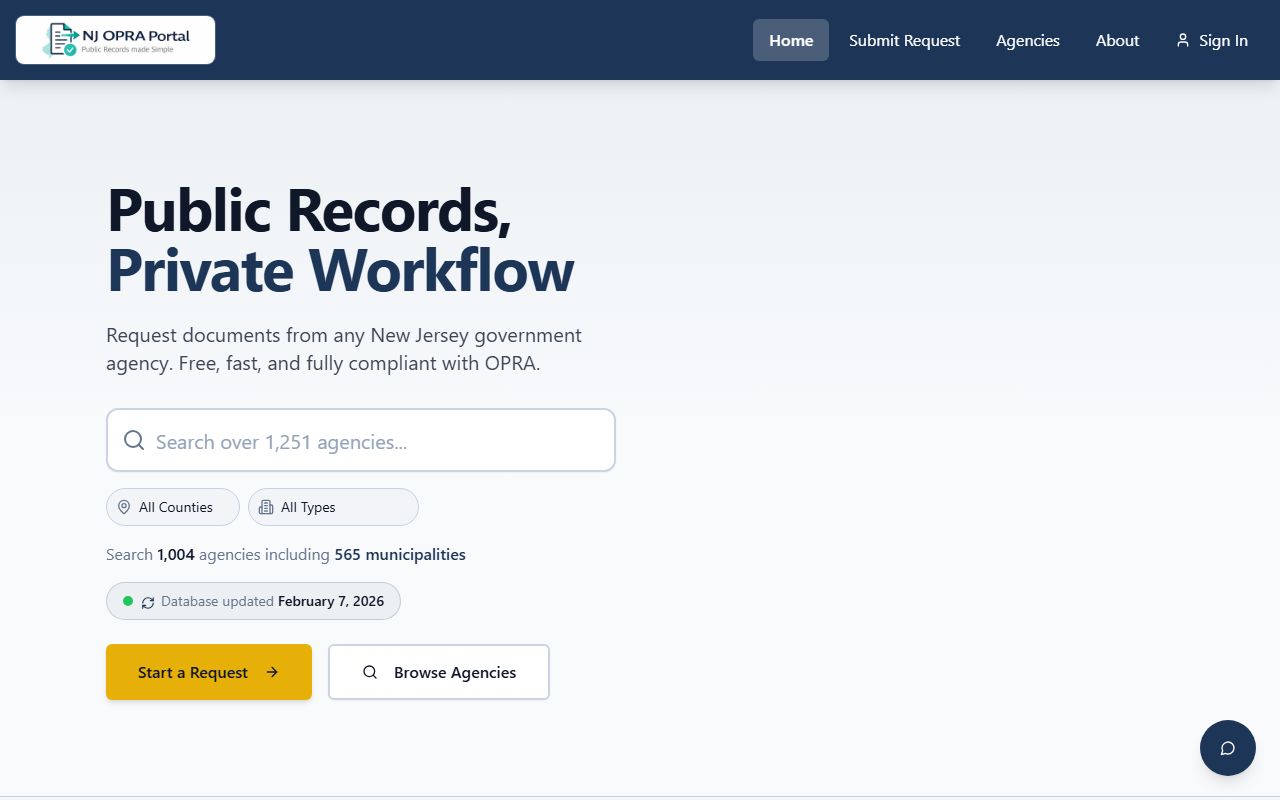
The NJ OPRA Portal provides a centralized way to submit records requests to state agencies. For county and municipal records, you may need to file directly with the local custodian of records. Response times vary, but the law requires a response within seven business days. Copies of records may involve a small per-page charge.
Nearby Counties
These counties border Sussex County. Property tax rates and assessment practices differ by county. If you own land near a county line, confirm which municipality and county your parcel falls in before filing tax documents or appeals.