
Passaic County Property Tax Lookup
Passaic County property tax records span 16 municipalities in the northern part of New Jersey. The county seat is Paterson, which is the third largest city in the state. The Passaic County Board of Taxation oversees local assessment rolls and hears appeals from property owners who dispute their assessed values. Each municipality has its own tax assessor who values all real property within the district. Residents can search records online, review assessment data, and file appeals through the county board or the New Jersey Tax Court.
Passaic County Quick Facts
Passaic County Board of Taxation
The Passaic County Board of Taxation invites residents to search real property tax related links and access key filing dates. The board certifies assessment lists for all 16 municipalities and hears appeals from taxpayers who believe their property has been overvalued. Under N.J.S.A. 54:4-1, all real property in the state must be assessed at true value, and the county board plays a central role in making sure local assessors meet that standard.
Filing deadlines are firm. Do not file an appeal before February 1. The standard deadline to file is April 1 by 4:00 PM, or 45 days from the date the county mails the assessment notice, whichever comes later. In years when a municipality completes a revaluation, the deadline shifts to May 1. Late filings are not accepted. The board holds hearings where both the taxpayer and the local assessor present their cases.
Under P.L. 2017, c.128, appeals for properties with an assessed value over $750,000 must go directly to the New Jersey Tax Court rather than the county board. This threshold applies across all Passaic County towns. Property owners with values below that amount may still choose to file with the Tax Court, but the county board is the more common first step.
| Office |
Passaic County Board of Taxation 401 Grand Street Paterson, NJ 07505 |
|---|---|
| Appeal Deadline | April 1, 4:00 PM (May 1 in revaluation years) |
| Website | passaiccountynj.org |
Assessment Records for Passaic County
Assessment records for all 16 Passaic County municipalities are available through taxrecords-nj.com. To search, select Passaic County and then choose a municipality. Results show the owner name, property address, assessed land value, improvement value, and total assessment. You can also view the property class, block, and lot for each parcel.
Under N.J.S.A. 54:4-23, every tax assessor must prepare an annual assessment list that values all taxable real property within the district. This list forms the basis for each year's tax bill. Assessors in Passaic County must keep their rolls in line with true market value as set by the county equalization table. The ratio of assessed value to true value can shift from year to year based on local sales data.
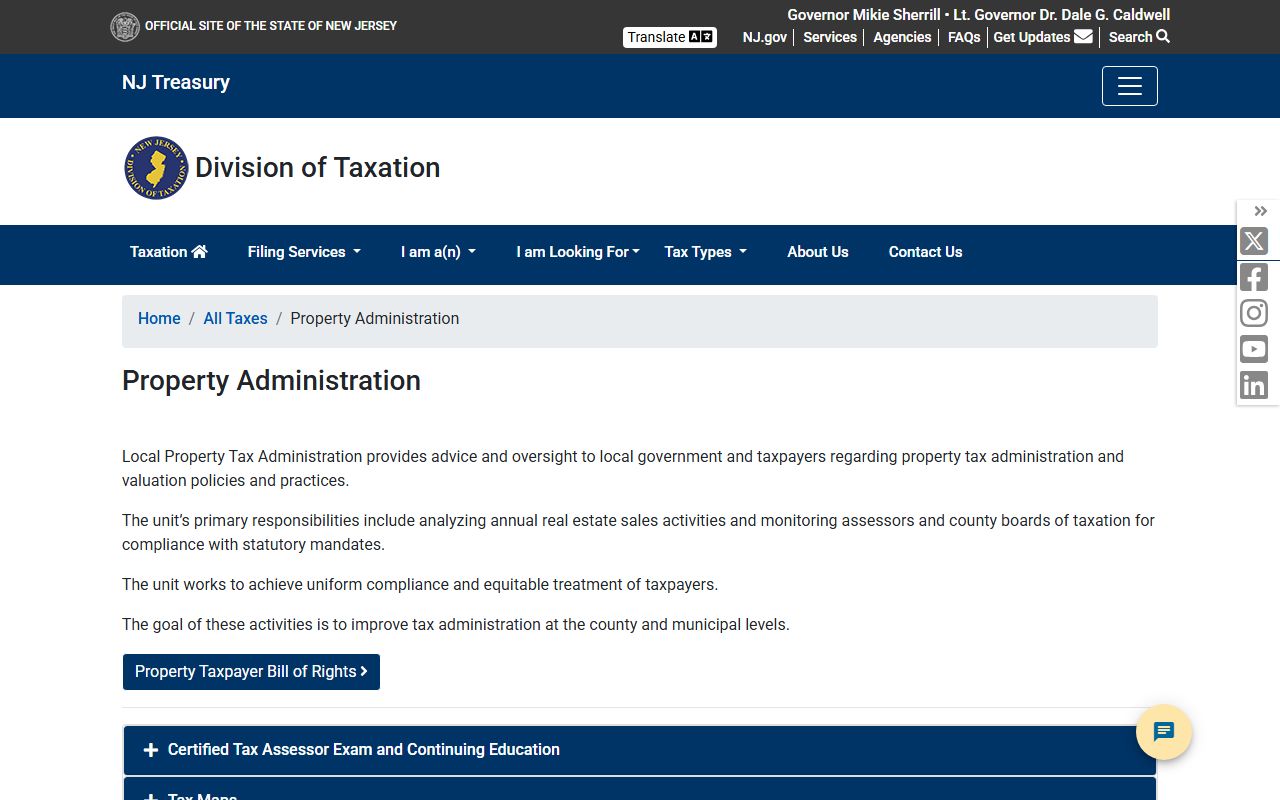
The New Jersey Property Explorer also includes Passaic County data. This state tool lets you compare tax levies, average assessments, and equalization ratios across all 16 towns. It is a good way to see how your municipality stacks up against the rest of the county.
Note: Online records may not reflect the most recent changes. For current figures, contact your local tax assessor.
Passaic County Land Records
The Passaic County Clerk maintains land records from 1837 to the present. The office handles deed and mortgage recording, UCC filings, and trade name registrations. Property owners and title companies use these records to verify ownership chains, check for liens, and confirm legal descriptions before any real estate transaction closes.
The Clerk's office provides an online document search tool. You can look up recorded deeds, mortgages, and other instruments by name, date, or document type. This search covers the full span of records on file. Under the Open Public Records Act (OPRA), most land records held by the Clerk are available to the public upon request.
Tax maps for all 16 Passaic County municipalities are also available at the County Clerk's Office. These maps show block and lot boundaries, dimensions, and right-of-way lines for every parcel. Assessors rely on these maps to identify and value real property as required by N.J.S.A. 54:4-26. When a property is subdivided or lots are merged, the assessor updates the tax map and assigns new block and lot numbers.
Filing a Tax Appeal
Any property owner in Passaic County who believes their assessed value does not reflect true market value may file an appeal. The appeal is submitted to the Passaic County Board of Taxation on Form A-1. You can get this form from the board's website or in person at the Paterson office. The NJ Division of Taxation appeal guide explains the full process for both the county board and the Tax Court.
Under N.J.S.A. 54:3-21, the taxpayer must show that the assessed value is unreasonable. Strong evidence includes recent comparable sales in the same neighborhood, an independent appraisal from a licensed appraiser, or proof of structural problems that reduce a property's worth. The board reviews all evidence at a scheduled hearing. It can raise, lower, or affirm the assessed value.
If you are not satisfied with the board's decision, you may appeal to the New Jersey Tax Court within 45 days of the judgment. The Tax Court is a separate venue with its own rules and filing requirements. Properties assessed above $750,000 bypass the county board entirely and go straight to the Tax Court under P.L. 2017, c.128.
Note: Keep copies of all documents you submit. The board does not return original paperwork.
Paterson Property Tax Records
Paterson is the largest city in Passaic County and the third largest in New Jersey. The Paterson Tax Assessor handles property assessments, tax map updates, and deduction applications for all parcels within the city. Residents can visit the office to review their property record card, which shows lot size, building details, and the breakdown of land and improvement values.
The city publishes annual tax rates that include municipal, county, and school portions. Each portion is set by a different governing body, but the combined rate is what appears on your tax bill. Under N.J.S.A. 54:4-1, the total assessment must reflect 100 percent of true value. Paterson's equalization ratio, published each year by the county board, shows how close the city's assessments are to that standard.
Qualified residents in Paterson may apply for property tax deductions. Senior citizens and disabled persons can receive a $250 annual deduction under N.J.S.A. 54:4-3.30 if they meet age and income requirements. Veterans who served during wartime are eligible for a $250 deduction under N.J.S.A. 54:4-3.15. Both deductions are filed with the city's tax assessor, not the county board.
Municipal Tax Rates
Annual tax rates are published for all 16 Passaic County municipalities. Each rate has three parts: the municipal portion, the county portion, and the school portion. Some towns also have a separate line for open space, library, or fire district taxes. The total of all portions is the general tax rate, which is expressed as dollars per $100 of assessed value.
The NJ Division of Taxation publishes tax rate tables and equalization data for every municipality in the state. You can use these tables to compare rates across Passaic County towns such as Clifton, Wayne, Passaic city, and Hawthorne. Rates vary widely based on local spending, school budgets, and the total assessed value of all property in the district.
To calculate your tax bill, multiply the total assessed value of your property by the general tax rate and then divide by 100. For example, a home assessed at $300,000 in a town with a rate of 3.50 would owe $10,500 per year. Tax bills are sent quarterly in most Passaic County towns, with due dates in February, May, August, and November.
Revaluation and Equalization
The Director of the Division of Taxation may order a municipality to conduct a full revaluation when its assessment ratio drifts too far from true market value. A revaluation involves inspecting every property in the district and assigning new assessed values based on current sales data and property conditions. Several Passaic County towns have gone through this process in recent years.
The county board applies equalization tables each year to adjust for differences in assessment ratios among the 16 municipalities. Under N.J.S.A. 54:3-18, the board must equalize the aggregate valuations so that each town pays its fair share of the county tax levy. Without equalization, a town assessing at 70 percent of market value would pay less than its share compared to a town assessing at 100 percent.
After a revaluation, the appeal deadline extends to May 1 for that tax year. Property owners should watch for updated Chapter 75 notices, which are typically mailed at the end of January and show the new assessed value for the coming year.
Tax Relief for Passaic Residents
New Jersey offers several programs that help reduce property tax costs for qualifying homeowners in Passaic County. Eligibility depends on age, income, disability, or veteran status. Applications are filed with the local municipal assessor or directly with the state, depending on the program.
- Senior citizen and disabled person $250 deduction under N.J.S.A. 54:4-3.30
- Veteran $250 deduction under N.J.S.A. 54:4-3.15
- Senior Freeze program that locks the tax amount for eligible seniors
- Homestead Rebate for qualifying property owners
The Senior Freeze program reimburses eligible senior citizens and disabled persons for property tax increases. To qualify, you must meet age and income limits and have lived in your home for at least three years. The state sends a reimbursement check equal to the difference between your base year taxes and your current year taxes. Full details, income limits, and application forms are posted on the NJ Division of Taxation website.
Cities in Passaic County
Passaic County includes 16 municipalities, each with its own tax assessor and local tax office. Property tax records for any town can be searched through the county board or the individual municipal assessor. Below are some of the largest cities and townships in the county.
Other municipalities include Hawthorne, Pompton Lakes, Ringwood, Wanaque, West Milford, Haledon, North Haledon, Totowa, Little Falls, Woodland Park, Bloomingdale, and Prospect Park. All file their assessment lists with the Passaic County Board of Taxation.
Nearby Counties
These counties border Passaic County. Property tax rates and assessment practices vary by county. If you own property near a county line, confirm which municipality and county your parcel falls in before filing any tax documents.