
New Jersey Property Tax Records
New Jersey property tax records are public documents kept by local assessors and county boards of taxation in all 21 counties. These records show assessed values, tax rates, ownership details, and parcel data for every piece of real property in the state. You can search property tax records online through state databases or request them from municipal offices. New Jersey has 564 municipalities, each with its own assessor who files property tax records with the county board each year. Several free tools make it easy to look up property tax records from home.
New Jersey Property Tax Records Quick Facts
Where to Find New Jersey Property Tax Records
Property tax records in New Jersey come from several sources. The main source is the local municipal assessor. Each of the 564 municipalities has an assessor who values all real property in that town. Assessors file their records with the county board of taxation on or before January 10 each year. The county board reviews these records and sends them to the state. The NJ Division of Taxation oversees property tax administration through the Local Property Tax Bureau. This state office collects and publishes property tax records from every town in New Jersey.
The NJ Division of Taxation provides a Property Tax List Search tool on its website. This tool lets you view and print assessment records that assessors submit each year. You can search by municipality, block, lot, or owner name. The data includes assessed land value, improvement value, total assessed value, and the property class code. It is free to use and open to the public.
The Division of Taxation website is the starting point for statewide property tax records in New Jersey.
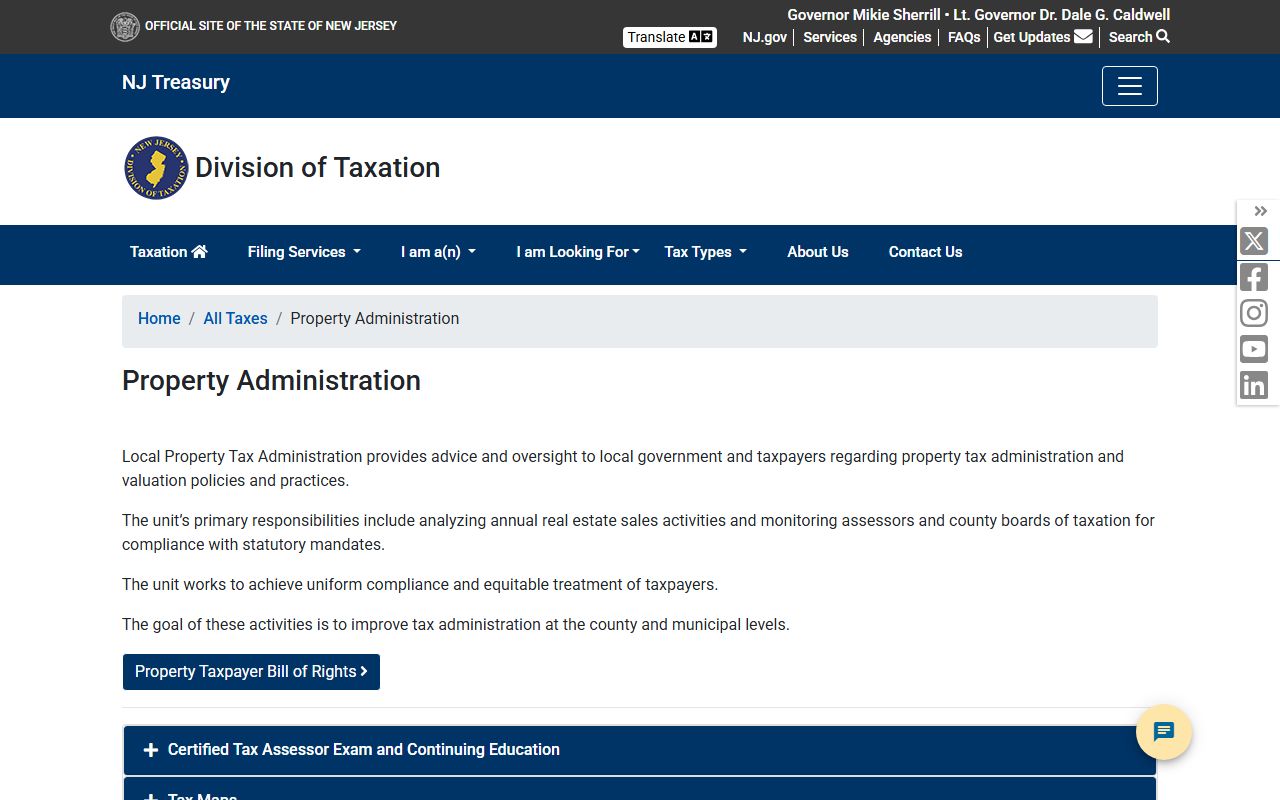
This page lists forms, guides, and links to local tax offices across New Jersey.
How to Search Property Tax Records Online
New Jersey offers several free online tools for looking up property tax records. The fastest option is the NJ Assessment Records Search, which pulls data from annual tax lists filed by all 564 municipal assessors. You type in a town name and then search by owner name, block and lot, or street address. Results show the assessed value, land value, improvement value, and property class for each parcel in New Jersey.
The YourMoney.NJ.Gov Property Explorer is another powerful tool. It displays property parcels on a map. You can click any parcel to see its owner, block and lot, assessed value, prior year taxes, and property classification. This tool is run by the state and covers all of New Jersey. It is a great way to compare property tax records across towns and counties.
The Property Tax Explorer shows assessed values and prior year taxes for parcels across New Jersey.
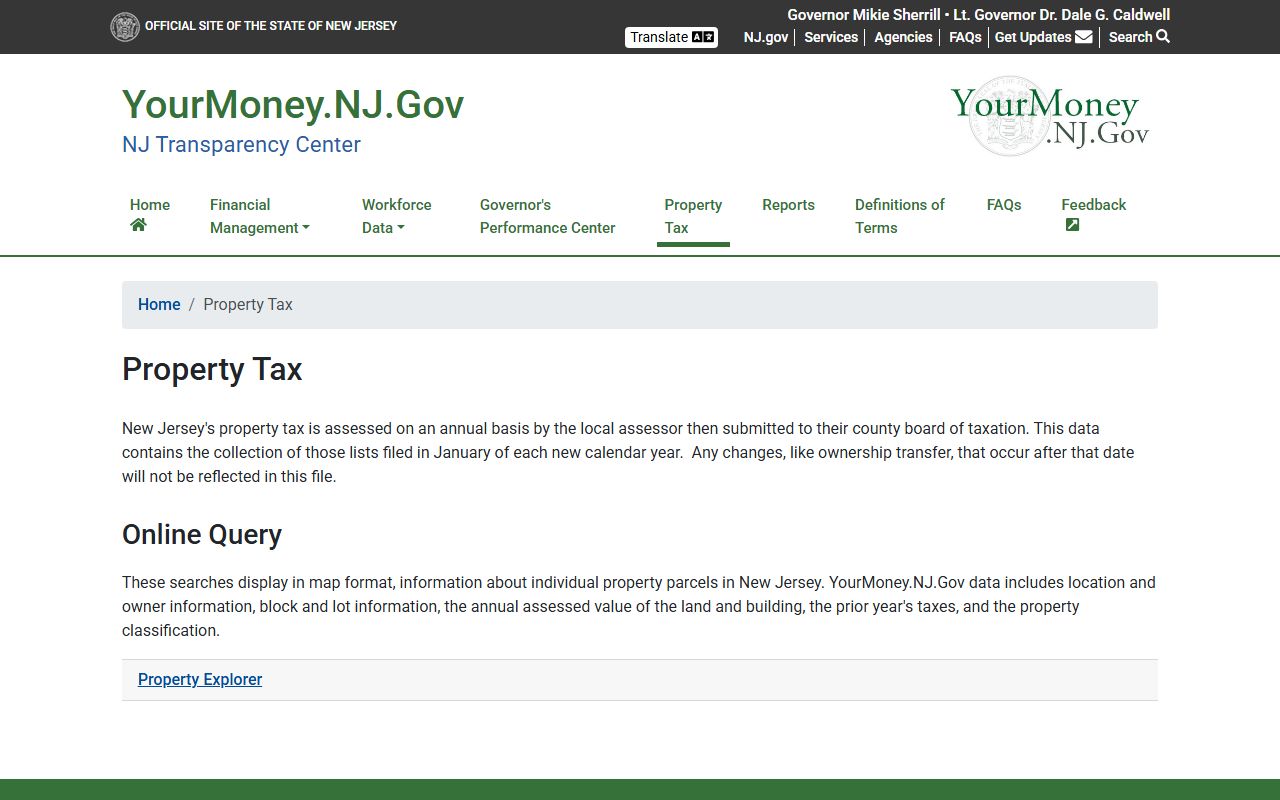
You can zoom in on any area to view parcel details and tax amounts in New Jersey.
To look up property tax records online in New Jersey, you will need some basic details:
- Municipality or town name
- Owner name or street address
- Block and lot number if known
- County name for narrowing results
Note: Online property tax records in New Jersey reflect the most recent annual filing and may not show mid-year changes.
New Jersey MOD IV Historical Tax Records
The NJ MOD IV Historical Database at Rutgers University is a major resource for property tax records in New Jersey. This database holds over 105 million parcel records. It spans more than 30 years of data from all 564 municipalities. Researchers, appraisers, and the general public can use it to track how property values and tax amounts have changed over time across New Jersey.
MOD IV stands for "Modified Division IV." The data comes from the annual tax list that each municipal assessor files. The Rutgers database stores these records in a searchable format going back decades. You can find assessed values, sale prices, property class codes, and ownership data for parcels throughout New Jersey. This makes it one of the most complete sources of historical property tax records in the state.
The MOD IV database at Rutgers stores decades of New Jersey property tax records from every municipality.
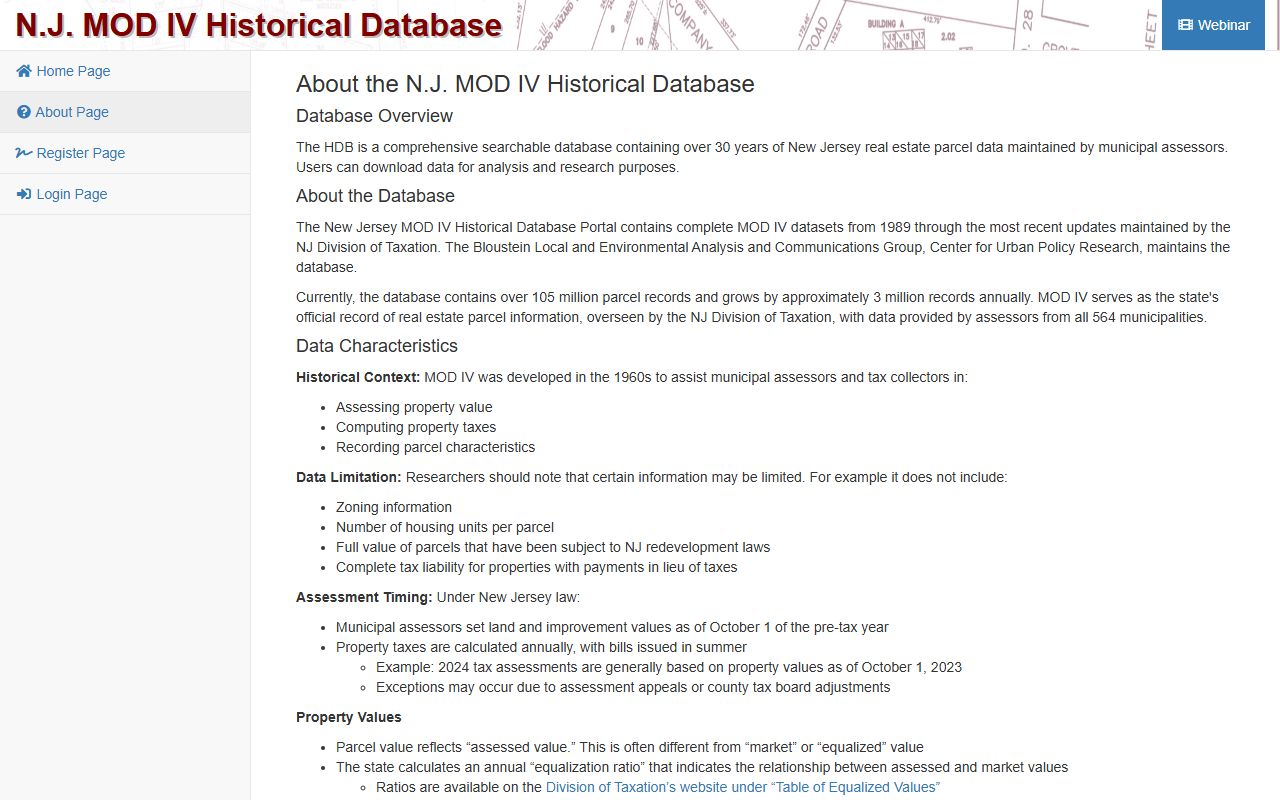
This tool is especially useful for tracking long-term trends in property values across New Jersey.
Property Tax Assessments in New Jersey
New Jersey uses an "ad valorem" tax system. This means the tax is based on the value of the property. All real property is assessed at "true value," also called market value. The standard is what a willing buyer would pay a willing seller on the open market. The assessment date is October 1 of the pretax year. All 21 counties in New Jersey assess at 100% of true value.
The basic authority for this system comes from Article VIII, Section 1, paragraph 1 of the New Jersey Constitution. The implementing law is found in N.J.S.A. 54:4-1 and related sections. Under N.J.S.A. 54:4-2.25, all real property must be assessed according to the same standard of value. N.J.S.A. 54:4-23 defines true value as "full and fair value" based on a bona fide sale as of October 1. These laws ensure that property tax records in New Jersey reflect a consistent and fair measure of value across every municipality.
If you believe your assessment is too high, you can file an appeal. File Form A-1 with the county board of taxation in your county. The deadline is April 1 each year, or May 1 in towns that had a revaluation. If the assessed value of your property exceeds $750,000, you may appeal directly to the Tax Court of New Jersey. Appeal forms and instructions are available from the NJ Division of Taxation forms page.
Note: The Property Taxpayer Bill of Rights, established by P.L. 2017, c. 128, ensures fair treatment and information access for all property taxpayers in New Jersey.
Public Access to New Jersey Tax Records
Property tax records are public in New Jersey. The state's Open Public Records Act, known as OPRA, gives citizens the right to access government records. This includes property tax records held by municipal assessors, county boards, and state agencies. You do not need to own the property or have any special standing to request these records in New Jersey. Anyone can look them up.
The OPRA Portal covers over 1,250 agencies across New Jersey. You can submit a records request through this portal to any participating agency. Agencies must respond within seven business days under N.J.S.A. 47:1A-5. If a town does not have the records you need, you can try the county or state level. The NJ Division of Taxation maintains copies of assessment records from all municipalities in New Jersey.
The OPRA Portal lets you file public records requests with over 1,250 agencies in New Jersey.
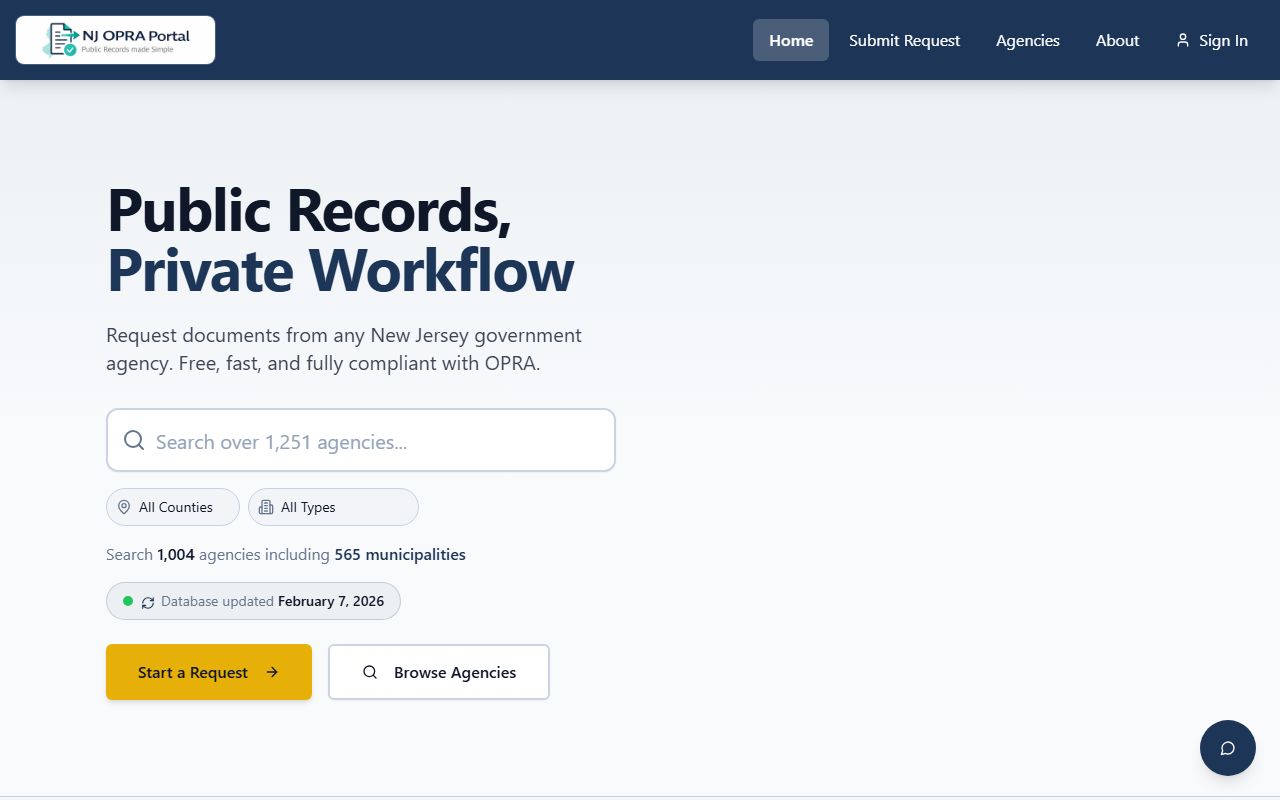
You can use this portal to request property tax records from any town, county, or state office in New Jersey.
Real estate sales ratio records are also public. Under N.J.S.A. 54:1-35.6, Form SR 1-A records are available to anyone who asks. These records show how the assessed value of a property compares to its sale price. They are useful for checking whether assessments are fair in a given town or county in New Jersey.
New Jersey Property Tax Statutes
Several state laws govern property tax records in New Jersey. The main statute is N.J.S.A. 54:4-1 et seq., which covers how property is assessed and taxed. This law gives municipal assessors the duty to value all real property and file their records with the county board of taxation. It also sets deadlines, appeal rights, and penalties for errors.
You can read the full text of New Jersey property tax statutes through the Justia New Jersey Code database. Key sections include N.J.S.A. 54:4-2.25, which requires all real property to be assessed at the same standard of true value, and N.J.S.A. 54:4-23, which defines true value as full and fair value at a bona fide sale on October 1. These laws shape the property tax records you find in New Jersey.
The Justia website provides free access to New Jersey property tax statutes and related real estate laws.
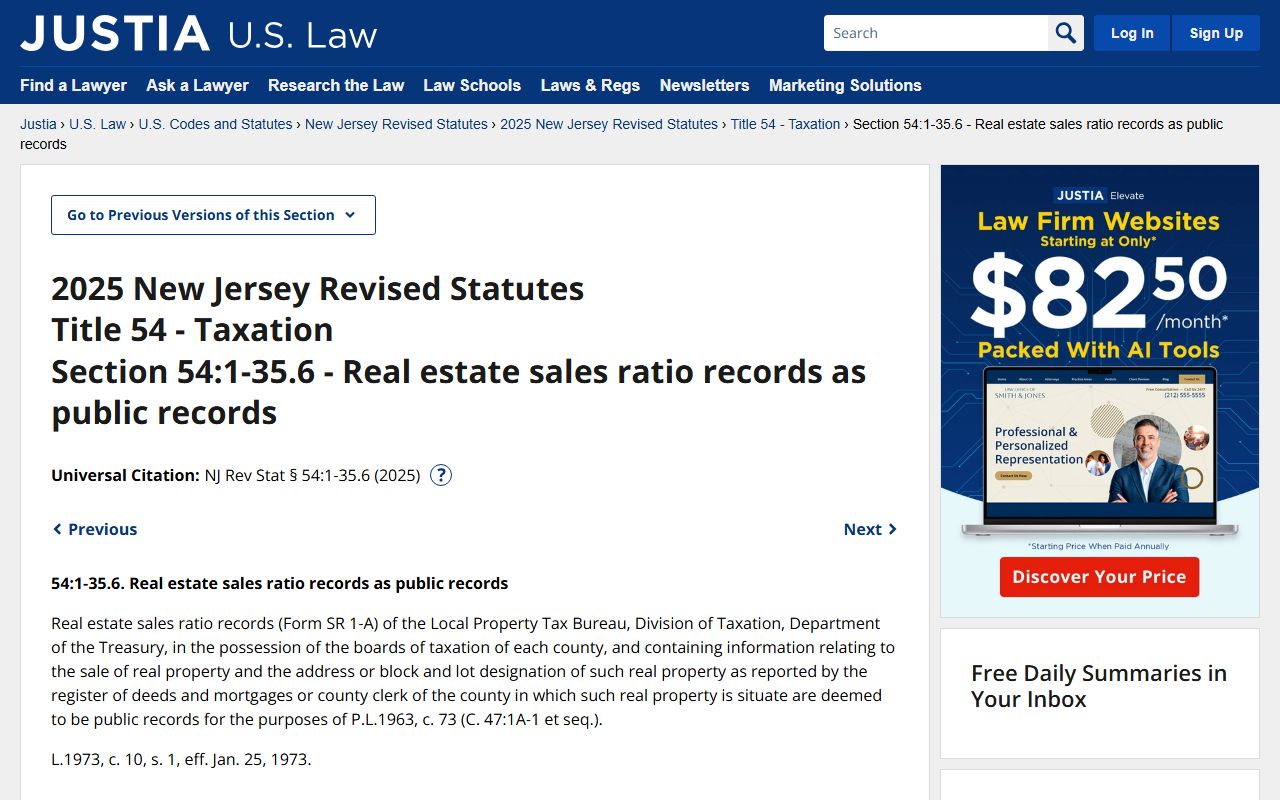
You can search by title and section number to find the exact law you need.
Tax Deductions and Exemptions in New Jersey
New Jersey offers several property tax deductions and exemptions. These can reduce the amount you owe. A senior citizen who meets the age and income requirements can receive a $250 deduction on their property tax bill. Veterans also qualify for a $250 deduction. Disabled persons get the same $250 deduction. A veteran who is 100% disabled receives a full exemption from property taxes in New Jersey.
Farmland assessment is another form of tax relief in New Jersey. Under the Farmland Assessment Act, land that is actively used for agriculture can be assessed at its farm use value rather than its full market value. This can result in much lower property taxes. To qualify, you need five or more contiguous acres and at least $1,000 in gross sales per year for the first five acres. The assessor reviews these applications and notes the farmland status in the property tax records for that parcel in New Jersey.
Note: Deduction and exemption amounts may change, so check with your local tax assessor for current figures in New Jersey.
County Tax Recording in New Jersey
Each county in New Jersey plays a role in maintaining property tax records. The county board of taxation receives assessment lists from every municipality in that county. The board reviews the lists, hears appeals, and certifies the final tax amounts. County boards also maintain equalization tables that compare assessments across towns. These records are public and available through the county office or the state.
The NJ Division of Taxation local tax page provides contact information for each county board of taxation in New Jersey. You can reach out to the board in your county to request records, ask about assessment practices, or learn about the appeals process. County boards are an important stop when researching property tax records in New Jersey because they hold records for all municipalities in their jurisdiction.
The local tax page lists county boards and their contact details for property tax records across New Jersey.
Each county board office can help you find property tax records for any town in that county.
More New Jersey Property Tax Resources
The Property Taxpayer Bill of Rights is an important resource for anyone dealing with property tax records in New Jersey. This law, passed in 2017, ensures that taxpayers receive fair treatment. It requires assessors and tax officials to provide clear information about assessments, deadlines, and appeal rights. Every property owner in New Jersey should know about this law.
The NJ Tax Portal is a central hub for tax services in New Jersey. You can access a range of tools and forms through this site. For property tax records, it links to the Property Tax List Search, assessment appeal forms, and deduction applications. The Taxpayer Bill of Rights general page also explains your rights when dealing with tax officials in New Jersey.
The NJ Judgment Search Portal is another useful tool. It lets you check for Certificate of Debt judgments filed by the NJ Division of Taxation. A Certificate of Debt, or COD, is a lien placed on property when taxes go unpaid. This information can appear in property tax records and affect title searches in New Jersey. Checking for COD judgments is a smart step before buying any property in the state.
Browse New Jersey Property Tax Records by County
Each county in New Jersey has a board of taxation that oversees property tax records. Pick a county below to find local assessment data and tax record resources.
Property Tax Records in Major New Jersey Cities
Residents of major cities can look up property tax records through their municipal assessor or the county board of taxation. Pick a city below to find local property tax record details.