
Morris County Property Tax Lookup
Morris County maintains property tax records for 39 municipalities spread across the western hills of northern New Jersey. The county seat is Morristown, where the Board of Taxation and County Clerk both keep offices. Property owners can search assessment rolls, review land records dating back to 1740, and check for liens through several public databases. The Board of Taxation holds jurisdiction over local assessment disputes and publishes sales data used for equalization. With a population of more than 509,000 residents, Morris County ranks among the larger counties in the state by both size and total property value.
Morris County Quick Facts
Morris County Board of Taxation
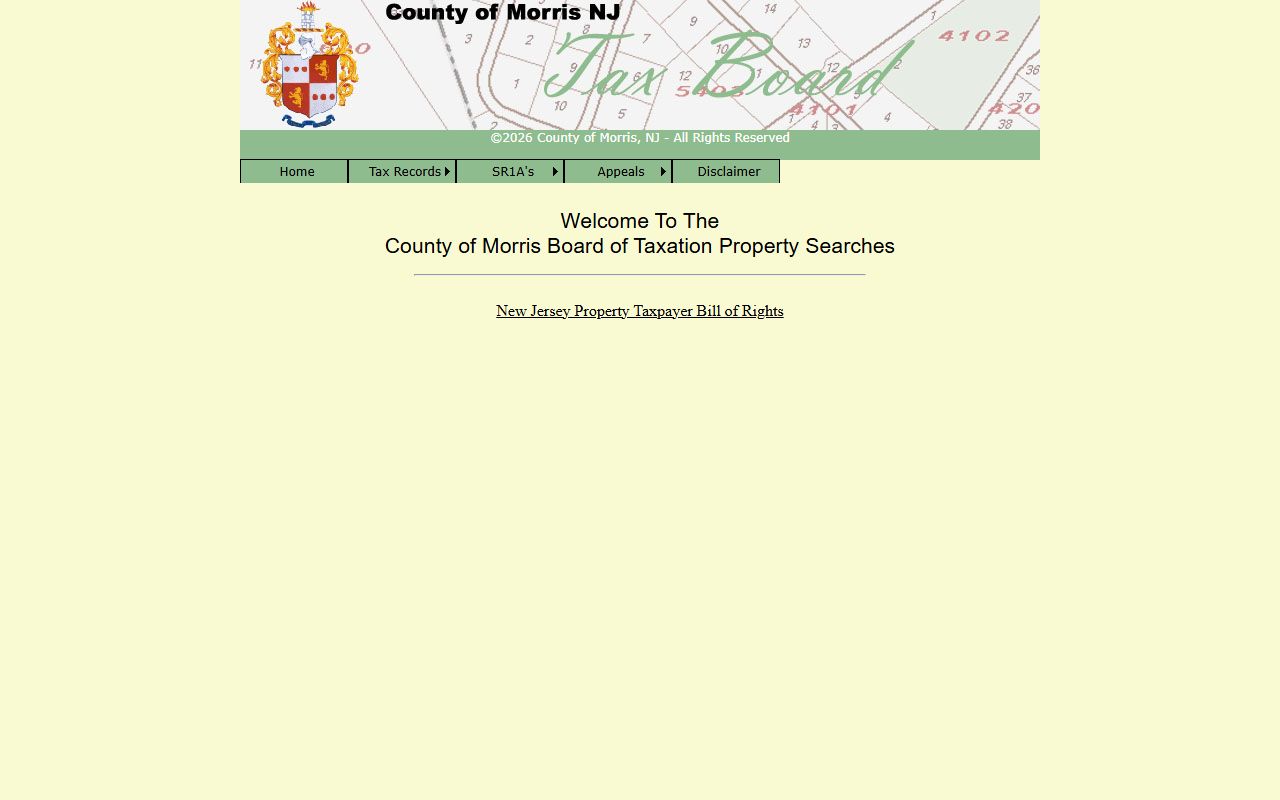
The Morris County Board of Taxation is located at the Administration and Records Building, 10 Court Street, 4th Floor, Morristown, NJ 07963. You can reach them at (973) 285-6750. The board stores assessment records for all 39 municipalities and publishes recent sales data that local assessors rely on for valuation work. Under N.J.S.A. 54:3-21, any property owner who believes their assessment is too high may file an appeal with the board.
Appeal deadlines in Morris County follow state law. The standard date is April 1. In years when a town completes a revaluation, the deadline shifts to May 1. Filing fees vary based on the assessed value of the property. The board may raise, lower, or confirm the assessment after hearing evidence from both sides.
Properties with assessed values above $1,000,000 must be appealed directly to the New Jersey Tax Court rather than the county board. This rule applies across all 39 municipalities. The Tax Court sits in Trenton and follows its own set of procedural rules under N.J.S.A. 2B:13-2.
| Office |
Morris County Board of Taxation 10 Court Street, 4th Floor Morristown, NJ 07963 Phone: (973) 285-6750 |
|---|---|
| Appeal Deadline | April 1 (May 1 in revaluation years) |
| Website | mcweb1.co.morris.nj.us/mctaxboard |
Land Records at the County Clerk
The Morris County Clerk holds land records from 1740 to the present. This is one of the longest continuous archives of any New Jersey county. The office maintains a Land Records System that supports searches by owner name, address, deed reference, or mortgage information. Buyers, title companies, and attorneys use this system to trace ownership chains and confirm that a property has clear title before closing.
Deed searches reveal the full chain of title for a parcel. Each deed shows the grantor, grantee, sale price, and a legal description of the land. Mortgage records are also on file and show the lender, loan amount, and date of recording. These records are public. Anyone can search them online or visit the clerk's office in person.
Under N.J.S.A. 46:16A-1, all deeds and instruments affecting real property must be recorded with the county clerk to be valid against third parties. Failing to record a deed can leave the buyer exposed to claims from other parties. Title searches through the clerk's system help prevent these problems.
Note: The online Land Records System may not include the most recent filings. Allow several days for new recordings to appear in the database.
Morris County Property Lien Search
A lien search through the Morris County Clerk involves checking multiple public databases. Liens can attach to a property from unpaid taxes, court judgments, mechanic's work, or pending lawsuits. Finding them before a purchase protects the buyer from inheriting old debts.
Start with the County Clerk's Land Records System. Search by owner name or property address and look for judgment liens, mechanic's liens, and lis pendens filings. Review the mortgage records to see if any outstanding loans are tied to the parcel. Under N.J.S.A. 2A:16-1, a lis pendens filing puts the public on notice that a lawsuit affecting the property is pending.
Next, contact the Morris County Tax Board to request a tax status certificate. This certificate shows whether the property has delinquent taxes or any municipal assessment liens. Under N.J.S.A. 54:5-19, municipalities may sell tax sale certificates on parcels with unpaid taxes. A certificate holder earns interest on the debt and may eventually foreclose if the taxes remain unpaid.
Finally, search the NJ Superior Court Judgment Database for state tax warrants and business tax liens. The state can place a lien on real property for unpaid income taxes, sales taxes, or corporate business taxes. These liens take priority over most other claims and must be cleared before a sale can close.
Note: A thorough lien search should cover all three sources. Missing one could leave a hidden claim on the property that surfaces after closing.
How Improvements Affect Assessments
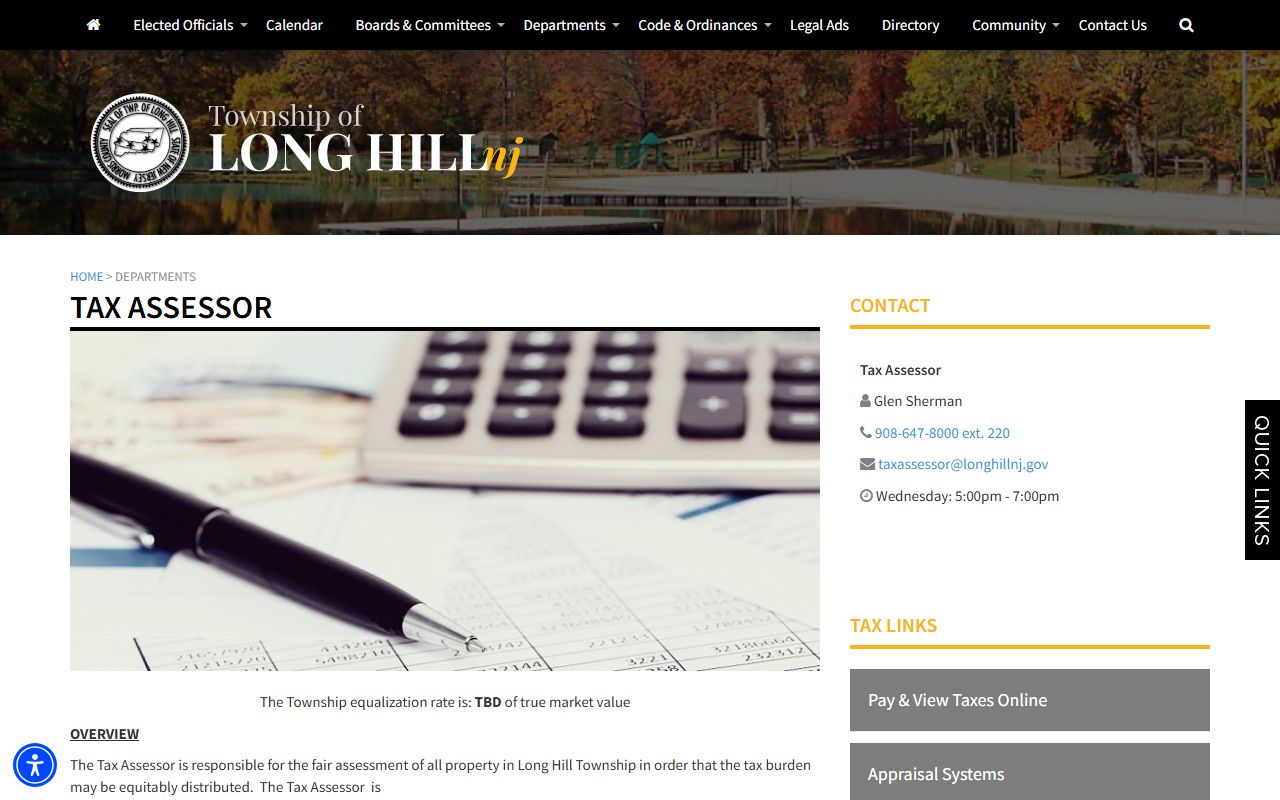
Not every change to a home triggers a new assessment in Morris County. The Long Hill Township Tax Assessor provides a clear guide on this topic that applies broadly across the county. Routine maintenance and minor upgrades do not change the assessed value. Above-ground pools, water heater replacements, and new roofing fall into this group. These items are considered normal upkeep rather than value-adding improvements.
Structural additions and major renovations do change the assessment. A new room, a remodeled kitchen or bath, a finished basement, a deck, or an in-ground pool will trigger a review. The assessor adds the new value starting in the month after the work reaches substantial completion. This added assessment appears on the next tax bill and reflects the cost or market value of the improvement, depending on which method the assessor uses under N.J.S.A. 54:4-63.1 through 63.38.
Property owners who disagree with an added assessment may file an appeal with the county board. The same April 1 deadline applies. Evidence of the actual cost of the improvement, along with comparable sales showing the impact on market value, can support the case.
Tax Deductions and Relief Programs
Morris County residents may qualify for several state-run programs that reduce the property tax bill. Each program has its own rules for eligibility. Applications are filed with the local municipal tax assessor, not the county board.
- Senior citizen and disabled person $250 deduction under N.J.S.A. 54:4-3.30
- Veteran $250 deduction under N.J.S.A. 54:4-3.15
- 100% disabled veteran full tax exemption under N.J.S.A. 54:4-3.32
- Senior Freeze program that reimburses tax increases for qualifying seniors
- Homestead Rebate for eligible homeowners
- NJ SAVER rebate for qualifying property tax payers
The Senior Freeze program, formally called the Property Tax Reimbursement program, locks in the tax amount for eligible senior citizens and disabled persons. To qualify, you must meet age and income requirements and have lived in the same home for at least three years. The NJ Division of Taxation local property tax page lists current income limits and has the forms you need.
The 100% disabled veteran exemption removes the entire property tax obligation. This benefit is available to veterans who have a total and permanent disability connected to their military service. It is one of the most significant tax relief measures in state law. Applications go through the local assessor, who verifies the veteran's disability rating with the U.S. Department of Veterans Affairs.
Online Assessment Search Tools
Several websites provide access to Morris County assessment records. The taxrecords-nj.com portal lets you search by municipality, owner name, or block and lot. Each record shows the land value, improvement value, total assessment, property class, and any deductions on file. This data comes from the annual assessment rolls that each municipal assessor files with the county board under N.J.S.A. 54:4-23.
The state's Property Tax transparency portal provides a broader view. It shows total levies, average tax bills, and equalization ratios for all 39 Morris County municipalities. You can compare rates between towns and see how the county levy is distributed. This tool is useful for anyone considering a move within the county or comparing tax burdens across different areas.
Assessment data updates once a year when the tax rolls are certified. For the most current information, contact your local assessor. They can provide the property record card, which shows the full breakdown of how your assessment was calculated, including the building dimensions, lot size, year built, and condition rating.
Note: Online records may not reflect recent sales, transfers, or added assessments. Always confirm with the local office before relying on these figures for a purchase or appeal.
Equalization Across Municipalities
The Morris County Board of Taxation applies equalization tables each year. These tables adjust for differences in how the 39 municipalities assess property relative to market value. One town might assess at 85% of true value while a neighbor sits at 100%. Without equalization, the town with lower assessments would pay less than its fair share of the county tax levy.
Under N.J.S.A. 54:3-18, the county board must equalize the aggregate assessed valuations so that each district contributes proportionally. The state Division of Taxation also publishes an equalization table that is used for school funding formulas and other purposes. Property owners can review their town's equalization ratio on the county board's website or through the state transparency portal.
Cities in Morris County
Morris County includes 39 municipalities, each with its own tax assessor and local tax office. Property records for any town can be searched through the county board or the individual municipal assessor. Below are the largest townships in the county.
Other municipalities include Morristown, Madison, Chatham, Randolph, Denville, Roxbury, Mount Olive, Rockaway, Boonton, Dover, Chester, Mendham, Hanover, East Hanover, Florham Park, Morris Plains, Mountain Lakes, Butler, Kinnelon, Lincoln Park, Montville, and Pequannock. All file their assessment lists with the Morris County Board of Taxation.
Nearby Counties
These counties border Morris County. Tax rates and assessment practices differ by county. If you own property near a county line, confirm which jurisdiction your parcel falls in before filing any tax documents.