
Somerset County Property Tax Guide
Somerset County property tax records span 21 municipalities in north-central New Jersey. The Somerset County Board of Taxation certifies local assessment rolls, hears tax appeals, and applies equalization tables across all districts. Each of the 21 towns maintains its own tax assessor who values real property under state law. Somerville serves as the county seat and hosts the board's main offices. Property owners can search assessment data, review deed records through the county clerk, and file appeals when they believe their valuation is too high.
Somerset County Quick Facts
Somerset County Board of Taxation
The Somerset County Board of Taxation oversees property assessment and tax appeal matters for all 21 municipalities. The board certifies each town's assessment list, reviews equalization ratios, and resolves disputes between taxpayers and local assessors. Under N.J.S.A. 54:4-1, all real property in the state must be assessed for tax purposes, and the county board ensures that this process is carried out fairly across its districts.
Tax appeals in Somerset County must be filed by April 1 of the current tax year. If a municipality has completed a revaluation, that deadline shifts to May 1. The board reviews each petition and can raise, lower, or confirm the assessed value based on evidence. Property owners with assessments that exceed $750,000 must file their appeals directly with the New Jersey Tax Court rather than the county board, as required under P.L. 2017, c.128.
The board also processes applications for property tax deductions. Qualified senior citizens and disabled persons may receive a $250 annual deduction under N.J.S.A. 54:4-3.30. Veterans who served during wartime can claim a separate $250 deduction. These forms are filed with the local tax assessor in each municipality, not with the county board.
| Office |
Somerset County Board of Taxation 20 Grove Street Somerville, NJ 08876 |
|---|---|
| Appeal Deadline | April 1 (May 1 in revaluation years) |
| Website | co.somerset.nj.us |
Assessment Records Lookup
Assessment records for Somerset County properties are available through taxrecords-nj.com. To search, select Somerset County and the specific municipality from the dropdown menus. Each record displays the assessed land value, improvement value, total assessment, property class, and any deductions or exemptions that apply. You can search by owner name, block and lot, or street address.
Under N.J.S.A. 54:4-23, every municipal assessor must prepare an annual assessment list that values all taxable real property in the district at its full and fair value. New Jersey law requires assessments to reflect 100 percent of true market value. The county board applies equalization ratios to adjust for any gaps between assessed values and actual sale prices in each town. These ratios help ensure that every municipality pays its fair share of the county tax levy.
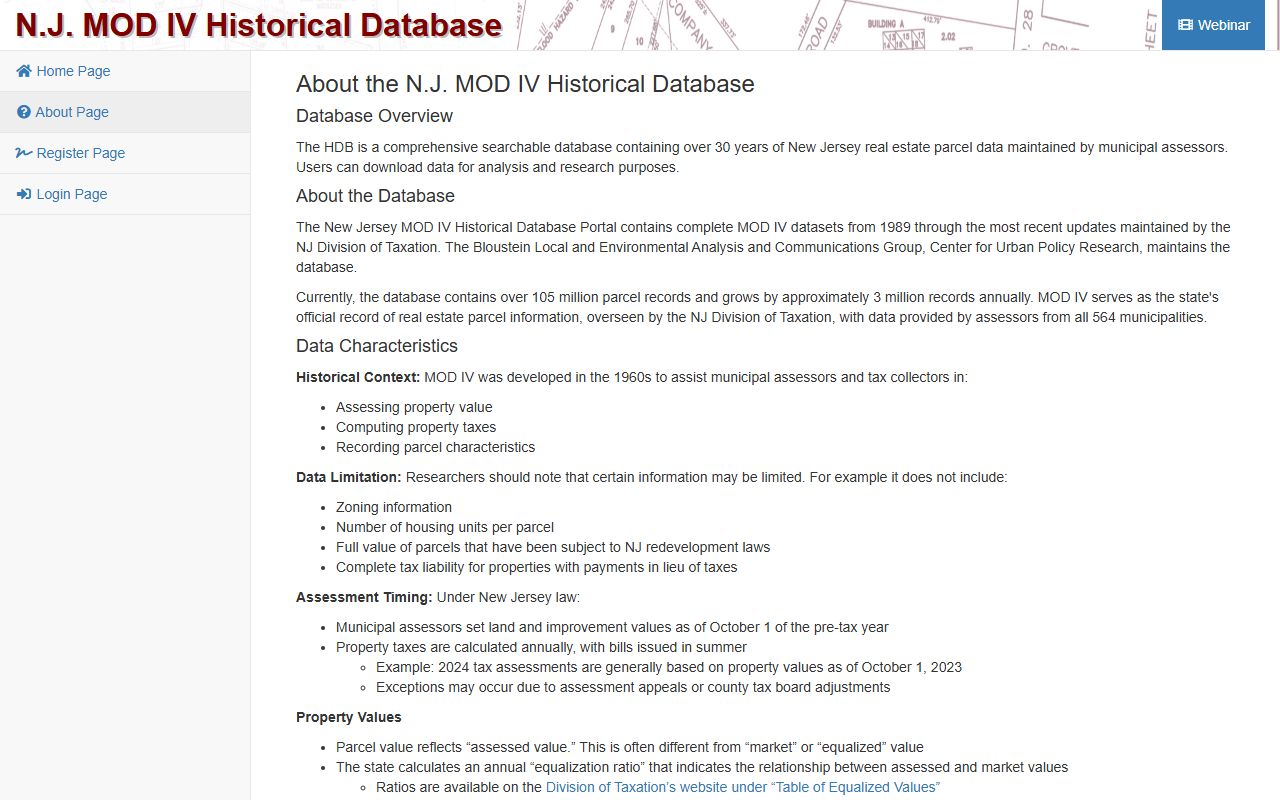
The NJ MOD-IV database at Rutgers University also provides historical assessment data for Somerset County. This resource allows researchers to track how property values have changed over time across all 21 municipalities. It draws from the state's official assessment records and is updated on a regular cycle.
Note: Online assessment data may not reflect the most recent changes. Contact your local assessor for the current tax year figures.
Somerset County Clerk Land Records
The Somerset County Clerk maintains land records dating back to 1784. These records include deeds, mortgages, liens, and other instruments that affect real property title. The clerk's office offers an online document search tool that allows users to look up recorded documents by name, date, or document type.
All real estate transactions in Somerset County must be recorded with the clerk's office to establish a public record of ownership. When a property is sold, the new deed is filed here. Buyers, title companies, and attorneys rely on these records to verify ownership and check for encumbrances before closing a deal. Under the Open Public Records Act (OPRA), these documents are available to any member of the public.
The clerk also records construction liens, lis pendens filings, and easements that may affect a property's use or value. If you are researching a parcel in Somerset County, a title search through the clerk's records is an essential step.
Tax Maps for Somerset Municipalities
Tax maps for all 21 Somerset County municipalities are maintained by local assessors and are available at county offices. Each map shows property boundaries, block and lot numbers, lot dimensions, and street locations. Assessors use these maps to identify and value parcels as required under N.J.S.A. 54:4-26. When a lot is subdivided or merged, the assessor updates the map and assigns new identifiers.
Tax maps serve a practical role for property owners, surveyors, and real estate professionals. They help confirm lot lines, check adjacent parcels, and verify block and lot numbers before filing documents with the county clerk. The maps are also used during tax appeals to show the physical characteristics of a property.
Note: Tax maps are not substitutes for a licensed survey. They are drawn for assessment purposes and may not reflect exact boundary locations.
Farmland Assessment in Somerset County
Somerset County has a significant number of agricultural properties that may qualify for Farmland Assessment under N.J.S.A. 54:4-23.1. This program allows qualifying land to be assessed based on its agricultural use value rather than its full market value, which can result in a much lower tax bill. The program is designed to help preserve farmland by reducing the tax pressure on working farms.
To qualify, the land must consist of at least five acres and have been actively devoted to agricultural or horticultural use for the two years prior to the tax year. The owner must file an application with the local tax assessor by August 1 each year. The NJ Division of Taxation farmland page outlines the full requirements, including minimum gross income thresholds for the farm operation.
If a property loses its Farmland Assessment status, the owner may owe rollback taxes. Under N.J.S.A. 54:4-23.8, rollback taxes cover the difference between what was paid under the farmland rate and what would have been paid at the full assessed value for the prior two years. Property owners should consult with their local assessor before making any changes that could affect their eligibility.
How to File a Tax Appeal
Somerset County property owners who believe their assessment exceeds the true market value of their property may file an appeal with the county Board of Taxation. Appeals are submitted on Form A-1, which is available from the board's office or website. The filing deadline is April 1 of the tax year in question. In years when a municipality completes a revaluation, the deadline extends to May 1.
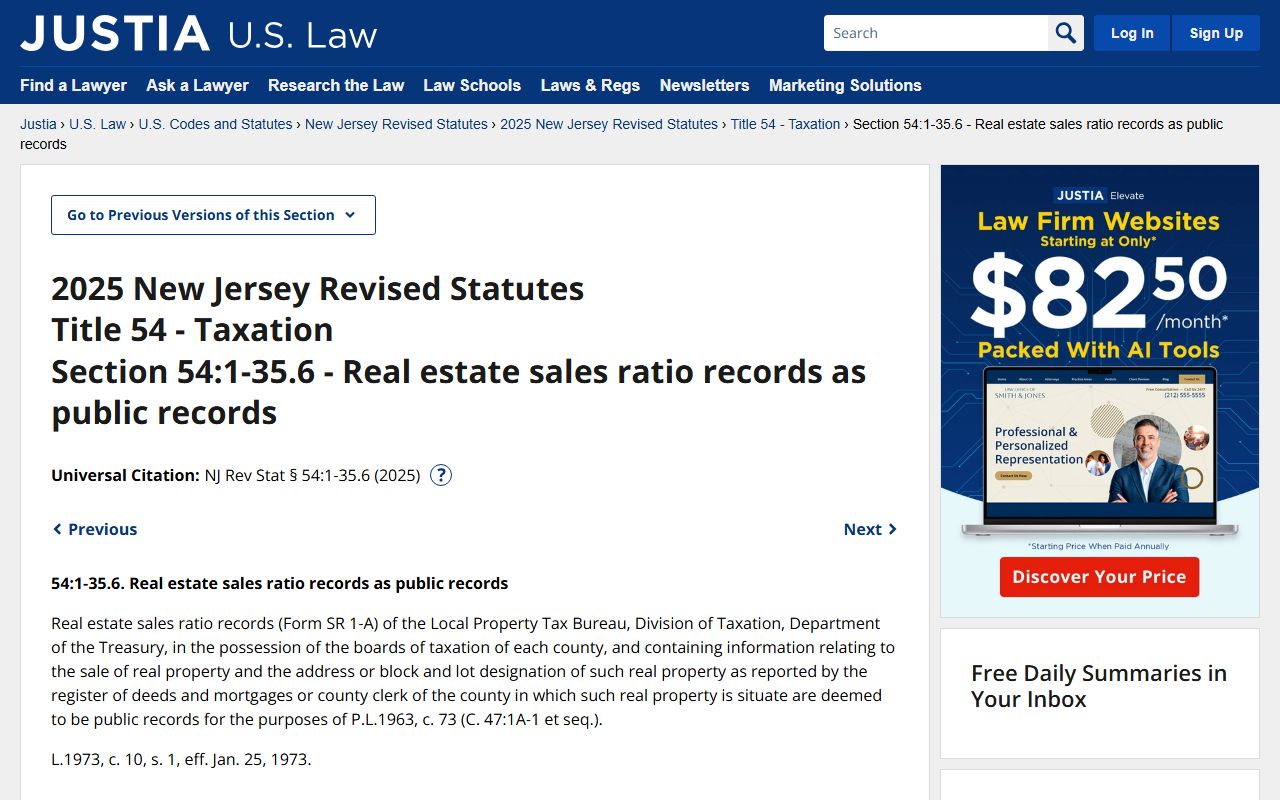
Under N.J.S.A. 54:1-35.6, all property in New Jersey must be assessed at its full and fair value. If the assessed value does not align with what the property would sell for in an open market transaction, the owner has grounds for an appeal. Evidence for an appeal typically includes recent comparable sales in the area, an independent appraisal, or documentation of property defects that reduce value.
The board schedules hearings where both the property owner and the municipal assessor present their cases. The board may affirm the assessment, lower it, or raise it based on the evidence presented. Property owners who disagree with the board's decision can appeal to the New Jersey Tax Court within 45 days. For properties assessed above $750,000, the initial appeal must go directly to the Tax Court under P.L. 2017, c.128.
State Property Tax Resources
Several state-level tools provide access to Somerset County property tax data. The NJ Property Explorer lets you compare tax levies, average assessments, and equalization ratios for all 21 municipalities in the county. This tool is useful for understanding how tax rates differ from one town to the next.
The NJ Division of Taxation local property tax page provides guidance on assessment practices, appeal procedures, and tax relief programs available to New Jersey residents. It also publishes the annual equalization tables that the county board uses to balance assessments across districts.
- Senior citizen and disabled person $250 deduction under N.J.S.A. 54:4-3.30
- Veteran $250 deduction under N.J.S.A. 54:4-3.15
- Senior Freeze program for eligible seniors and disabled persons
- Farmland Assessment for qualifying agricultural properties
- OPRA requests for public property records access
These programs help reduce the tax burden for qualifying homeowners. Applications are filed with the local tax assessor in each Somerset County municipality. Income limits and eligibility criteria are set by the state and may change from year to year.
Revaluation and Equalization Process
The Director of the Division of Taxation may order any Somerset County municipality to conduct a revaluation when local assessments drift too far from market values. A revaluation involves a physical inspection of every property in the town and a reassignment of assessed values based on current sales data and property conditions. This process brings the municipality's assessment ratio closer to the 100 percent standard required by N.J.S.A. 54:4-23.
Between revaluations, the county board applies equalization tables each year. Under N.J.S.A. 54:3-18, these tables adjust the aggregate valuations of each municipality so that every district pays its proportionate share of county taxes. Without equalization, a town that assesses at 70 percent of market value would pay less than its fair share compared to a town that assesses at full value.
After a revaluation is completed, property owners receive updated Chapter 75 assessment notices. These notices show the new assessed value for the upcoming tax year. The appeal deadline extends to May 1 in the year a revaluation takes effect. Owners who disagree with their new value should review comparable sales in their area before deciding whether to file.
Note: Equalization ratios are published annually and can be found on the NJ Division of Taxation website. These ratios are also used to calculate school aid formulas and other state funding distributions.
Cities in Somerset County
Somerset County includes 21 municipalities, each with its own tax assessor and local tax office. Property tax records for any town can be searched through the county board or the individual municipal assessor. Below is the largest municipality in the county by population.
Other municipalities include Bridgewater Township, Hillsborough Township, Warren Township, Bernards Township, Montgomery Township, Raritan Borough, Bound Brook, Manville, North Plainfield, Watchung, Branchburg, Bedminster, Green Brook, Bernardsville, Peapack-Gladstone, Far Hills, Rocky Hill, Millstone, and South Bound Brook. All file their annual assessment lists with the Somerset County Board of Taxation.
Nearby Counties
These counties border Somerset County. Property tax rates and assessment practices vary by county. If you own property near a county line, confirm which municipality and county your parcel falls in before filing any tax documents.